

What is the best way to take care of our skin once we hit our beloved fifties? It seems like everywhere you look and everyone you ask will have a different answer to this question. No, it’s not just your peri-meno-brain making this all seem confusing.
According to the American Academy of Dermatology Association “Studies show that women’s skin loses about 30% of its collagen during the first five years of menopause. After that, the decline is more gradual. Women lose about 2% of their collagen every year for the next 20 years.”
So I guess the good news is, it’s bad now, but then it gets less bad.
In order to create a straight-forward, go-to checklist for our aging skin’s needs, based on some of the most common concerns, I turned to Clean Skincare Consultant, Marian Wells who says:
“There are many incredible ingredients out there, with each company adding its own unique touch. But here are some key staples to look for.”
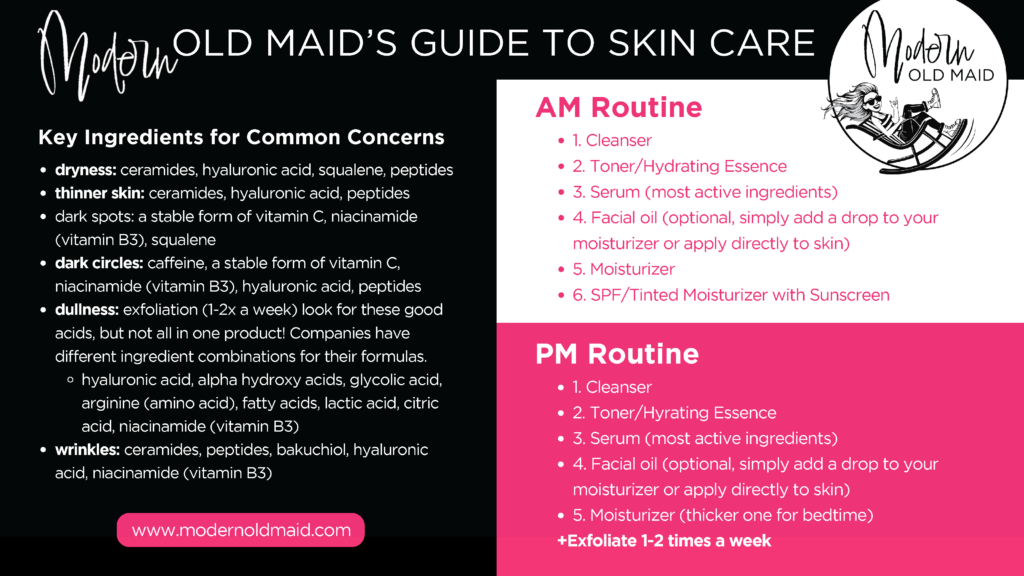
Key Ingredients for Common Concerns
- dryness: ceramides, hyaluronic acid, squalene, peptides
- thinner skin: ceramides, hyaluronic acid, peptides
- dark spots: a stable form of vitamin C, niacinamide (vitamin B3), squalene
- dark circles: caffeine, a stable form of vitamin C, niacinamide (vitamin B3), hyaluronic acid, peptides
- dullness: exfoliation (1-2x a week) look for these good acids, but not all in one product! companies have different ingredient combinations for their formulas.
- hyaluronic acid, alpha hydroxy acids, glycolic acid, arginine (amino acid), fatty acids, lactic acid, citric acid, niacinamide (vitamin B3)
- wrinkles: ceramides, peptides, bakuchiol, hyaluronic acid, niacinamide (vitamin B3)
Keep in mind, you may not need (and likely may not find) all of these in a single product. Based on your proprietary blend of concerns, create your own signature cocktail of ingredients to implement across your skincare regimen.
In order to make this guide “unbiased”, no product brand names will be suggested, that’s up to you.
“Skincare routines should be practical. Six steps might feel overwhelming. Start simple and you can always work more products into your routine.”
The essentials? Cleansing, Moisturizing, Sunscreen.
Your Day and Night Skincare Regimen
AM routine:
1. Cleanser
2. Toner/Hydrating Essence
3. Serum (most active ingredients)
4. Facial oil (optional, simply add a drop to your moisturizer or apply directly to skin)
5. Moisturizer
6. SPF/Tinted Moisturizer with Sunscreen
PM routine:
1. Cleanser
2. Toner/Hydrating Essence
3. Serum (most active ingredients)
4. Facial oil (optional, simply add a drop to your moisturizer or apply directly to skin)
5. Moisturizer (thicker one for bedtime)
+Exfoliate 1-2 times a week
No need to memorize or re-google this information every couple of years, this downloadable PDF has all of the basics for you to keep – fo free!
“Ingredients Matter”
Marian’s number one piece of advice for women over 50 when it comes to skincare? “Ingredients matter.”
“Your skin is your largest organ, and what you put on it impacts both your skin and overall health. Where ingredients are sourced and tested matters, reputable companies will share this information on their website.”
Avoid retinol. It can be harsh, especially for rosacea, eczema, or sensitive skin. It also increases sun sensitivity. Bakuchiol is a plant-based ingredient that acts as an antioxidant and anti-inflammatory. It’s a gentle alternative to retinol, offering similar skin-renewing benefits without the irritation.
Be aware of PFAS. Often called “forever chemicals,” PFAS are commonly found in cosmetics like lipstick, eyeshadow, foundation, waterproof mascara, moisturizers, and sunscreen. These chemicals create a smooth feel and can improve product performance, but don’t break down easily, accumulating in the body over time. Since PFAS are rarely listed on labels, it’s crucial to choose trusted brands that prioritize transparency and safety. Glycerin is a safe ingredient alternative.
Mind the fragrance loophole. Companies can hide hundreds of toxic ingredients under the term “fragrance.” If your product has a scent, make sure it’s not coming from “fragrance” on the label.
Facial oils won’t make your skin more oily! The oil your skin naturally produces is different from a topical facial oil, which is packed with healthy, nourishing fatty acids. In fact, facial oils help restore your skin’s lipid barrier and protect against environmental stressors.
Should You Supplement Your Topical Treatments?
We’ve all seen a litany of social media ads and news reports touting the latest breakthrough in oral supplements, so I asked Marian if taking supplements can really play a role in improving skin’s appearance.
“Research shows a strong connection between gut health and skin. An imbalanced gut microbiome can lead to inflammation, worsening acne, eczema, and other skin issues. Since most of our immune system lives in the gut, a healthy microbiome helps keep skin clear and balanced.”
Some of the key nutrients to consider:
Collagen: Collagen can help support skin’s elasticity and help retain necessary hydration. Be sure to opt for high-quality supplements with multiple strains of collagen.
Omega-3 Fatty Acids: These can help combat inflammation which impacts dryness, fine lines and other skin issues. You can look for these fatty friends in supplements as well as in foods like fish, leafy greens, and certain nuts and seeds.
Probiotics: Probiotics help keep the bad bacteria in our gut in check and promote the good bacteria, leading to a healthier micro-biome which shows through our skin.
Vitamin A: Vitamin A is a powerful anti-oxidant compound, essential for promoting skin renewal. Carrots, tomatoes, sweet potatoes and broccoli all contain this super booster.
Vitamins D and E: These are also antioxidants and a combination that is found in most quality women’s multivitamins.
A holistic inside-and-out approach is your best bet to protecting your skin and fighting back against visible signs of aging.
Seeing spots? Check out my previous post “How To Handle Dark Spots: Tips from a Woman Over 50.”
Looking For a More Personal Program?
I want to thank Marian Wells for her solid advice and help in putting this post together. If you’d like a more personal approach to making safe, clean skincare stress-free, she would love to help create a simple, effective routine that works specifically for you — offering her support every step of the way. Look her up at marianwells.com.
A Healthy Outlook
In the end, the fact is we’re getting older, including every single cell and atom that have carried us through so much so far. Having a little of that experience show on our bodies is a testament to how far we’ve come.
While it’s important to do our best to protect all aspects of our bodies, our unique history is written like a timeline in every line and spot and droop. The more we can learn to appreciate these changes, the healthier we can become overall.



Any advice for modern old blokes?
Bahaha, just be good Andy. 🙂 Thanks for stopping by.